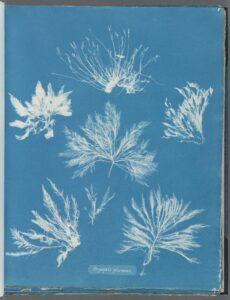
Spencer Collection, The New York Public Library. “Bryopsis plumosa” The New York Public Library Digital Collections. https://digitalcollections.nypl.org/items/202e5750-073a-0135-858a-015d1fdefa4a
That’s what I wrote in the preface to Elderwood, where characters move between different versions of their names – nicknames, translations, anglicisations – as their identities slip between the different roles they play.
It’s also something I’m aware of in my own life. I publish my fiction under a pseudonym. It’s a practice which divides a lot of people. For me, I have a day job where I’m expected to communicate facts. So keeping a clean separation between my professional life and my writing life gives me the freedom to create fiction.
Added to which, I’m a very private person.
But writing Elderwood, and in particular, writing that preface, makes me think again about my choice of pseudonym.
I chose the surname ‘McAuliffe’ because it sounds a lot like my mother’s maiden name – to the point where someone transcribed her name as that on my baptismal certificate (yes, there is such a thing as a baptismal certificate! and I have one!). A kind of Ellis Island confusion, I guess. At any rate, when I was growing up, I always thought that if McAuliffe was actually my name, I’d fit in so much better. So when the time came, it seemed like a natural choice in my quest for anonymity through pseudonymity.
Fitting in, of course, depends on where you find yourself.
Now that I no longer live in Ireland, ‘McAuliffe’ doesn’t have the same ability to blend into the background. Instead, it suggest an origin which arguably isn’t mine. Although I am Irish by birth, by education, by osmosis and by allegiance, my parents weren’t, and I was born long enough ago to remember a time when this was enough to make me stand out. (They weren’t English, either, which let me off one hook – the colonial legacy – and straight onto another: unfamiliarity…)
This could be why the hauntings in Elderwood are so entwined in how national identities shift and reshape themselves. In the story, it’s very much about how Anglo-Irishness has been constructed – and othered – in Ireland. But I can see now that part of what I was working through was the difficulty of straddling cultures, and of feeling that you don’t quite belong in the only homeland you know.
I’m happy to say that Ireland’s changed a lot since I was a child. From the outside, at least, it seems to be far more accepted that one can be Irish without having a surname that translates as Gaeilge, or a generational history rooted in one location, or a particular creed or colour. I’d like to believe that this is how things look from inside as well, and I’m looking forward to hearing new Irish voices expressing their reality. Which isn’t to denigrate the weight and value that cultural rootedness also holds. But like any other identity, surely Irishness can only become richer by becoming more plural.
And as for finding a surname that blends into the background: the great thing about living in London is that the background is so variegated that nothing blends in, and yet everything does. For now, at least, I’m keeping ‘McAuliffe’. It’s a name I have history with.